Best AI Relationship Apps for Couples (2026): An Honest, Research-Backed Guide
What AI relationship apps for couples actually do in 2026, honest pros and cons, and when you don't need one. A clear, research-backed guide.

What an "AI Relationship App" Actually Means in 2026
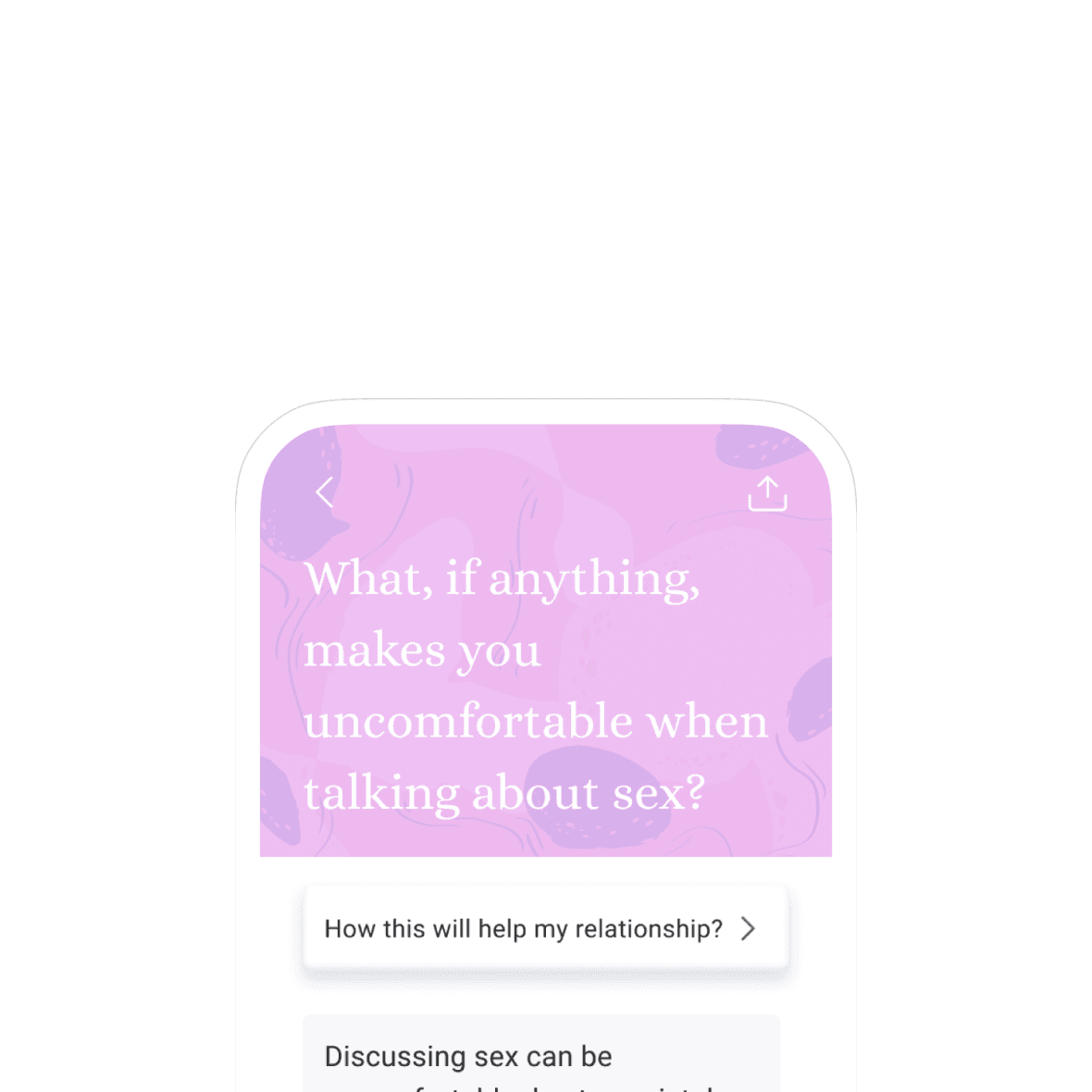
An AI relationship app for couples is a mobile tool that uses artificial intelligence to prompt daily connection, coach you through communication in the moment, and surface patterns in how you and your partner relate. The best options in 2026 — Cuddle, Paired, Lasting, and Relish among them — don't try to replace your partner or a licensed therapist; they create structured, private opportunities to practice research-backed relationship skills. There is no single "best" app for everyone: the right choice depends on whether you want daily prompts, guided lessons, live human coaching, or an always-on AI coach. Below is an honest look at what these apps do, what the research actually shows, and when you are better off skipping the app entirely.
The phrase "AI relationship app" gets used loosely, so it helps to separate what is actually on the market. In 2026, most couple-focused apps fall into one of a few overlapping categories:
- Daily check-in and prompt apps. These deliver a question, conversation starter, or micro-exercise each day. The AI personalizes what you see based on your relationship stage and past answers. The value is habit, not intelligence.
- Coaching-in-the-moment apps. These use a conversational AI coach you can message when something comes up — before a hard talk, after a fight, or when you just want to feel closer. Think of it as a research-informed sounding board that is available at 11 p.m. on a Tuesday.
- Communication and pattern analysis. Some tools track sentiment, engagement, and recurring themes over time, then gently flag when connection is slipping or a topic keeps getting avoided.
- Guided-program apps. Structured, multi-session courses (often modeled on established frameworks) that walk you through skills week by week.
- Human-coach hybrids. Apps that pair software with a real person you message or meet, blending automation with human judgment.
Most modern apps mix two or three of these. The important thing is to match the category to what you actually want to change, rather than downloading the one with the prettiest onboarding screen. If you are still deciding whether an app or a person is the right call, our guide to couples therapy vs relationship coaching breaks down the full landscape of support.
Do AI Relationship Apps Actually Work?
Short answer: yes, when they are well designed and both partners actually use them — but the effect is best understood as steady maintenance, not a cure.
The strongest evidence comes from a 2025 systematic review and meta-analysis published in BMC Psychology, which pooled 15 studies on digital interventions for couples. Most of the eligible studies found significant improvements in relationship satisfaction, and those gains were often sustained at follow-up. A narrower meta-analysis of six studies within that review found a significant, moderate effect size — meaningful, but not a miracle. The authors noted that digital tools are especially promising because they remove common barriers to traditional support: cost, scheduling, stigma, and access.
App-specific research is starting to appear too. A 2025 mixed-methods evaluation published in JMIR mHealth and uHealth looked at the Paired app across surveys and interviews with hundreds of users, and found the app was associated with improvements in perceived relationship quality — while being appropriately cautious that a full randomized controlled trial is still needed to prove cause and effect.
A few honest caveats, because this is a category where hype runs ahead of data:
- The research is young. Many studies are pilots or observational, and the field is calling for larger randomized trials.
- Effect sizes are moderate, not dramatic. Apps help; they do not rescue a relationship on their own.
- Usage is everything. The benefit shows up when both partners engage consistently. A subscription no one opens does nothing.
If you want a deeper look at the science and where AI genuinely helps versus where it does not, we cover that in does AI relationship coaching really work.
Comparison Table: The Main AI Relationship Apps for Couples
Below is a fair, side-by-side snapshot of well-known couple apps as of mid-2026. Pricing changes frequently and varies by platform and region, so treat these as ballpark figures and confirm current prices in the app before you subscribe. We have deliberately left out star ratings and user-count claims, because those numbers are easy to inflate and hard to verify.
| App | Primary approach | AI coaching | Daily prompts | Human coaching | Typical price (2026) | Best fit for | |-----|-----------------|-------------|---------------|----------------|----------------------|--------------| | Cuddle | AI coaching + daily check-ins, quizzes, and games | Yes, always-on AI relationship coach | Yes | No | Around $11.99/mo or $59.99/yr, 7-day free trial | Couples who want an always-available AI coach plus a daily connection habit | | Paired | Daily questions and expert-informed content | Limited | Yes, core feature | No | Around $14.99/mo or roughly $70 to $84/yr; one subscription covers both partners | Couples who want a simple daily-question ritual | | Lasting | Structured, Gottman-informed guided sessions | Limited | Some | No | Around $29.99/mo or $89.99 for six months | Couples who want a step-by-step "marriage counseling" style program | | Relish | App content plus a one-on-one human coach | Limited | Yes | Yes, real coach | Around $99.99 for six months | Couples who specifically want a human coach in the loop |
A few reads on this table. If your main gap is connection habit, a prompt-first app like Paired or a check-in-heavy app like Cuddle fits. If you want a curriculum to work through, Lasting's guided programs are built for that. If you specifically want a human accountable to you, Relish's coach model is the reason it costs more. And if you want an AI coach you can talk to in the moment — not just a canned daily question — that is the lane Cuddle is built for.
What to Look For (and the Red Flags to Avoid)
Not all "AI for couples" is created with your best interests in mind. Here is how to tell a genuinely helpful tool from a slick funnel.
Green flags — look for these:
- A research-backed approach. The content should be grounded in established relationship science (attachment, conflict repair, emotional attunement) and honest about its methods. If you want a primer on the frameworks good apps draw from, start with attachment styles in relationships.
- Clear, plain-language privacy handling. You should be able to find, in the app store listing or privacy policy, what data is collected, whether it is sold or shared, and how it is secured. Look for encryption and a "we do not sell your data" commitment.
- Both-partner design. The best couple apps facilitate conversation between you, rather than replacing your partner with a screen.
- Honest boundaries. A trustworthy app tells you what it cannot do and points you toward a licensed professional when the situation calls for it.
Red flags — be cautious of these:
- "Replace your partner" or "AI girlfriend/boyfriend" gimmicks. A tool meant to deepen your real relationship should never nudge you toward an artificial one.
- Dark patterns. Impossible-to-cancel subscriptions, fake countdown timers, or a "free" plan that is unusable by design.
- Vague or aggressive data handling. If you cannot tell what happens to your intimate conversations, assume the worst and move on.
- Overblown clinical claims. Any app promising to "cure" anxiety, save a marriage on the brink, or substitute for therapy is overselling.
On that last point: even the best AI tool is not a therapist. If your relationship involves abuse, a mental-health crisis, or trauma that needs processing, an app is not the right first stop — a licensed professional is. Good apps say this out loud.
Where AI Helps Most — and Where a Human Still Wins
It helps to be clear-eyed about the division of labor.
AI relationship apps are strongest at:
- Prevention and maintenance. Small, consistent connection beats occasional grand gestures. Apps are excellent at manufacturing daily touchpoints. (Our piece on relationship rituals that last explains why these small repeated moments matter so much.)
- Structure and consistency. An AI never forgets, never has an off day, and shows up at the same time every evening.
- A low-stakes practice space. Some people find it easier to rehearse a vulnerable sentence or a repair attempt with an AI before saying it to their partner.
- Skill-building between bigger conversations. Prompts and exercises help you practice things like active listening until they become second nature.
A human — therapist, coach, or your own partner — still wins at:
- Crisis and safety. Abuse, self-harm, and acute mental-health emergencies require trained people.
- Reading the room. Body language, tone, and the charged energy between two people are things a text-based AI simply cannot see.
- Complex trauma. Deep-rooted wounds need the nuance and containment of a trained clinician.
- The therapeutic bond itself. Part of what heals in therapy is being truly seen by another human. No algorithm replicates that.
The most realistic framing for 2026 is hybrid: use AI for the daily reps and use humans for the heavy lifting. Many therapists already recommend apps between sessions, the way a physical therapist assigns exercises to do at home.
When You Don't Need an AI Relationship App
Honest guides tell you when to keep your money. You probably do not need an AI relationship app if:
- You and your partner already have a strong, consistent connection ritual — a real daily check-in, regular date nights, easy repair after conflict. If your habits are working, an app is redundant.
- You are in crisis. If there is abuse, an active mental-health emergency, or you are deciding whether to end the relationship, skip the app and go straight to a licensed professional or, in the U.S. and Canada, the 988 Suicide and Crisis Lifeline; in the UK, call the Samaritans at 116 123.
- The real issue is one specific, solvable problem. If you simply need to divide chores or plan finances, a single honest conversation (or our guide to fair division of household chores) may do more than a subscription.
- Only one of you is willing. Couple apps work when both people participate. If your partner is not interested, an individual approach — including individual therapy — will serve you better.
- You would use it to monitor or control your partner. An app should never become a surveillance tool. That impulse is a sign to work on trust directly, not to add technology.
How Couples Get Real Results From an App
If you do decide to try one, the difference between "waste of money" and "genuinely closer" comes down to a few habits.
1. Both of you sign up in week one. The single biggest predictor of benefit is joint participation. Have the download-and-first-prompt moment together, not "I'll get around to it."
2. Anchor it to an existing routine. Tie the daily prompt to something you already do — morning coffee, the commute home, lights-out. Habits stick when they piggyback on other habits.
3. Treat prompts as doorways, not quizzes. The goal is not to "answer correctly." It is to let one question open a five-minute real conversation. The app is the match; you are the fire.
4. Use the AI coach before hard moments, not just after. A quick "how do I bring this up without it turning into a fight?" beats replaying the argument later.
5. Review your patterns monthly. If the app tracks themes, take five minutes together to notice what keeps coming up. That is where prevention actually happens — often around the same recurring tension, which we unpack in why you keep having the same fight.
6. Let it make you need it less. The point of good relationship AI is to build skills you carry off-screen. If in six months you are connecting well without checking the app every day, it worked.
Frequently asked questions
Cuddle is an AI-powered relationship coaching app that blends an always-on AI coach with daily check-ins, quizzes, and playful exercises — designed to help both partners build a lasting connection habit, not to replace your partner or your therapist. You can try it free for 7 days.
Transform Your Relationship Now!
Build deeper intimacy through expert-guided exercises.